 DinoDig
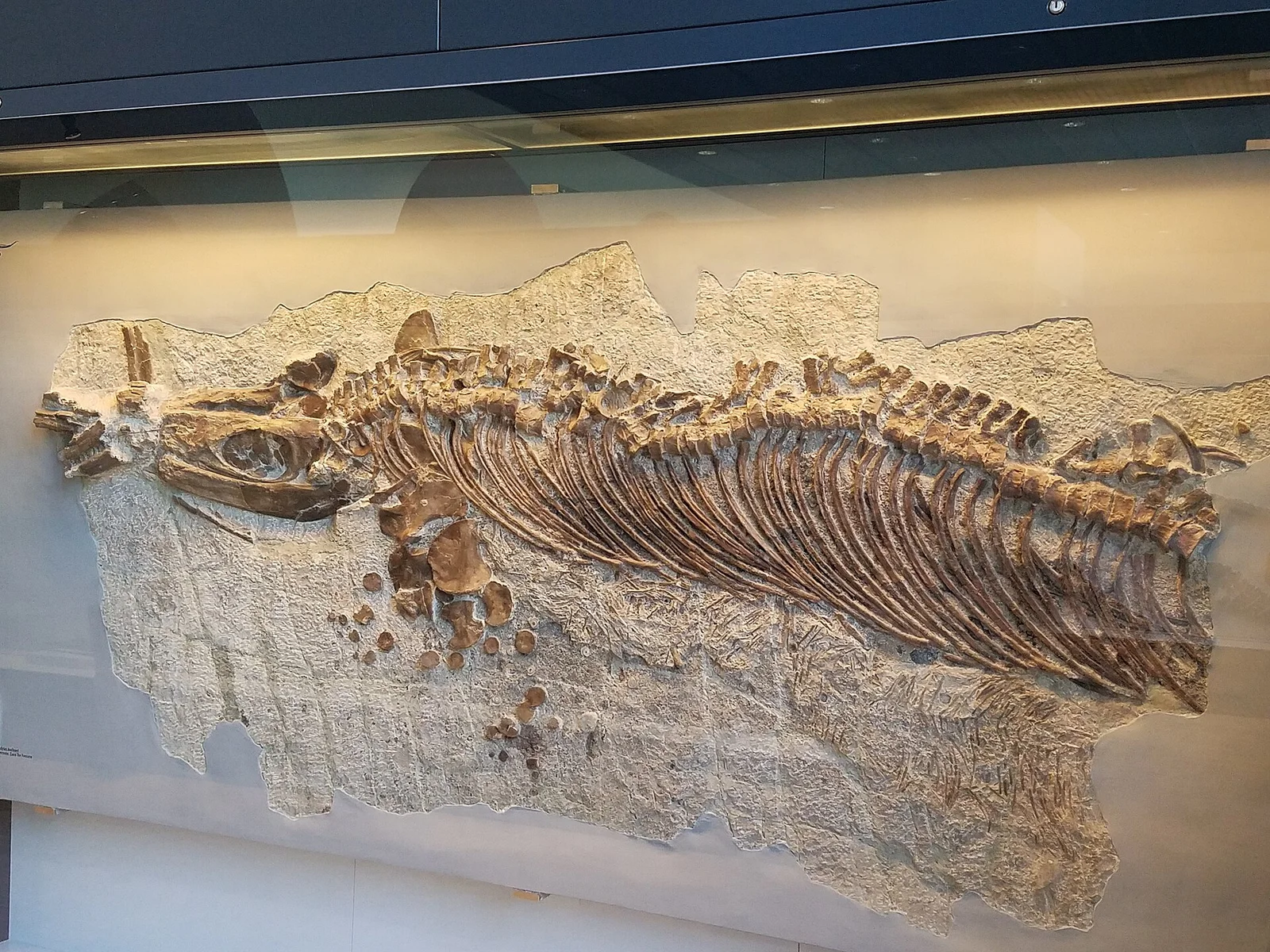
Cymbospondylus buchseri
- Time
- 241.5–243.3 million years ago
- Period
- Unknown
- Known sites
- 1

Summary
Cymbospondylus is an extinct genus of large ichthyosaurs, of which it is among the oldest representatives, that lived from the Lower to Middle Triassic in what are now North America and Europe. The first known fossils of this taxon are a set of more or less complete vertebrae which were discovered in the 19th century in various mountain ranges of Nevada, in the United States, before being named and described by Joseph Leidy in 1868. It is in the beginning of the 20th century that more complete fossils were discovered through several expeditions to the Fossil Hill Member launched by the University of California, and described in more detail by John Campbell Merriam in 1908, thus visualizing the overall anatomy of the animal. While many species have been assigned to the genus, only five are recognized as valid, the others being considered synonymous, doubtful or belonging to other genera. Cymbospondylus was formerly classified as a representative of the Shastasauridae, but more recent studies consider it to be more basal, view as the type genus of the Cymbospondylidae.
Source: Wikipedia - Cymbospondylus
Known Sites
Loading known-site map...