 DinoDig
Massospondylus carinatus
- Time
- 174.7–201.4 million years ago
- Period
- Unknown
- Known sites
- 11

Summary
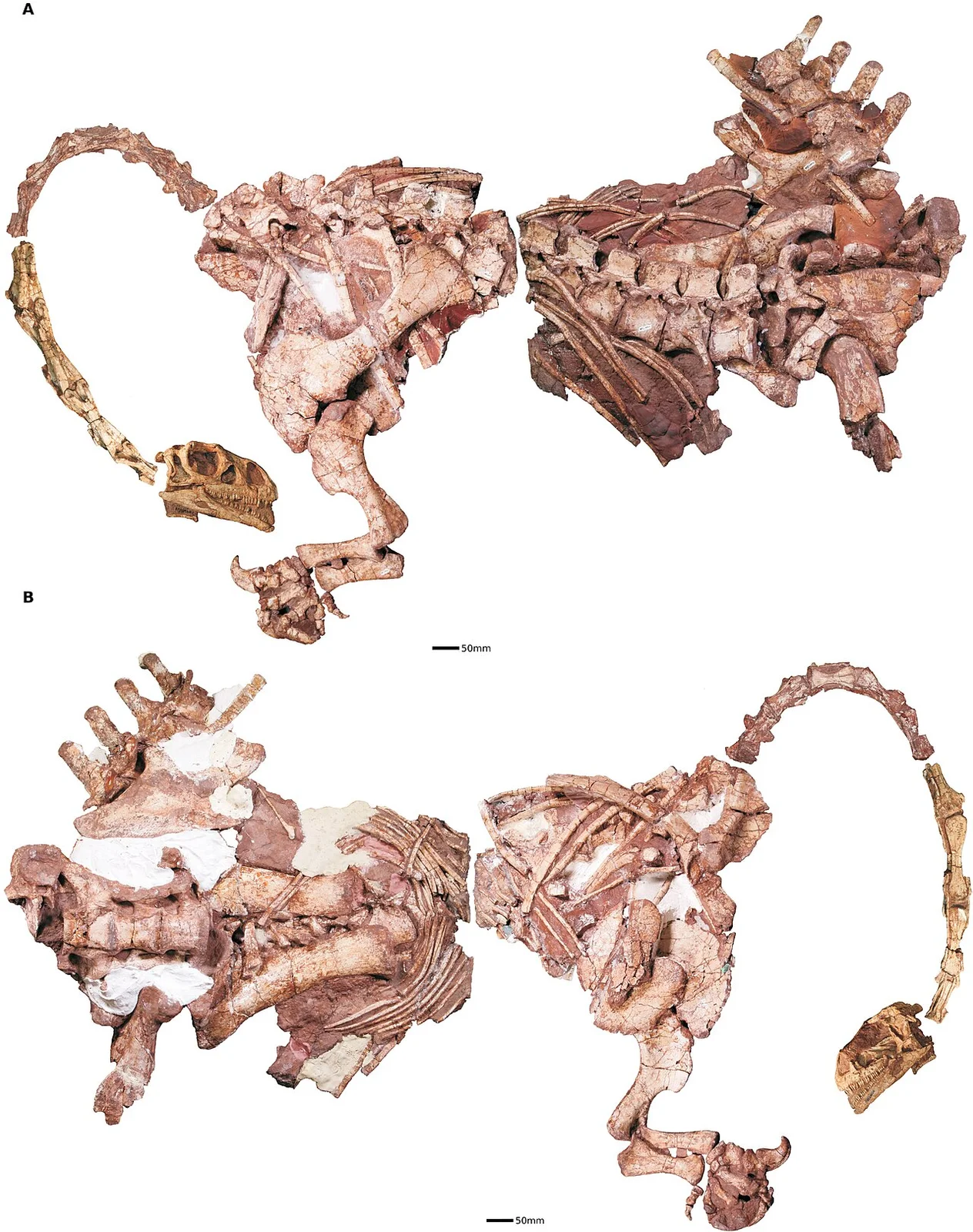
Massospondylus is a genus of sauropodomorph dinosaur from the Early Jurassic of southern Africa. It was described by Richard Owen in 1854 from remains discovered in South Africa, and is thus one of the first dinosaurs to have been named. The name Massospondylus means 'longer vertebra', alluding to what Owen identified as tail vertebrae; these vertebrae are now known to be from the neck. Although the original fossils were destroyed in London during The Blitz, a plethora of specimens have since been assigned to the genus, making it one of the best-known sauropodomorphs from the Early Jurassic. The genus lived during the Hettangian, Sinemurian, and Pliensbachian ages, which lasted from ca. 201 to 184 million years ago. Most fossils come from the upper Elliot and Clarens formations of South Africa and Lesotho, but the genus is also found in the Forest Sandstone and the Mpandi Formation of Zimbabwe. Material from the US, India, and Argentina was previously assigned to the genus, but the US and Argentinian specimens are now assigned to their own genera. Because of their great abundance, Massospondylus fossils have been used to date rocks, and a biozone, the Massospondylus Range Zone, is named after the genus.
Source: Wikipedia - Massospondylus
Known Sites
Loading known-site map...